Want to help children eat better? Design an optimal mealtime environment.


As introduced in last week’s blog, my early career as a Registered Dietitian Nutritionist largely centered on helping parents and other caregivers learn how to feed the young children in their care.
In this blog series, I am sharing the key principles from materials I created with a Team Nutrition grant that was titled RECIPE for Growing Healthy Children. Now that these materials are no longer in print, this series makes this valuable content available again.
In the first post, we covered R, which stands for Role Model what we want children to be, say, and do.
In this post, we will cover E, which stands for a mealtime Environment that encourages children to practice healthy behaviors. My free resources page has links to the training video covering this portion of the training, the workbook pages and the environment video linked below. Note: these resources were produced when the Food Guide Pyramid was in use.
What follows shares content from the training manual.
What is the mealtime environment?
The mealtime environment includes the physical surroundings, mealtime routines, procedures for serving, and the social interactions during meals. These factors play an important role in encouraging healthy behaviors and promoting well-being.
In childcare workshops, this component was introduced by having participants imagine mealtime in their programs from the standpoint of a young child. With this image in mind, they assessed their mealtime environments with the following five comparisons by checking the statement that comes closest to describing their environment. After completing the assessment, participants discussed with the person sitting next to them something positive about their environment and something they thought needed to be changed.
Mealtime Environment Assessment
a. Tables and chairs are too high for some children and too low for other children.
b. Tables and chairs are sized so that all children’s feet are firmly on the floor and tabletops are mid-chest on all children.
a. Adults serve all foods onto children’s plates.
b. Small, lightweight serving bowls with rims are used so children can pass food around the table. Utensils are easily handled by children for self-serving.
a. Children are not allowed to serve themselves, avoiding messes and preventing contamination of food.
b. Children are taught skills for safely passing foods. Adults monitor and respond with corrective measures when children cross-contaminate food.
a. Adults determine how much food is placed on children’s plates.
b. Adults support children as they learn how to choose portion sizes to match how much they can eat.
a. Mealtime routines are established to be convenient for staff scheduling and are structured to run smoothly by the clock.
b. Children help maintain the meal environment by setting tables, helping clean spills, and clearing dishes. Adults allow for and respond to variances in routines, but still keep mealtimes focused.
Before discussing the assessment, I shared the answers to the following questions, and participants observed the demonstration described below.
What is the optimal mealtime environment?
The optimal mealtime environment allows children to serve themselves and provides the physical surroundings, equipment, routine, and instruction for that to happen successfully. This is the environment for what is referred to as “family-style service.”
What is ‘family-style service’ and why is it recommended?
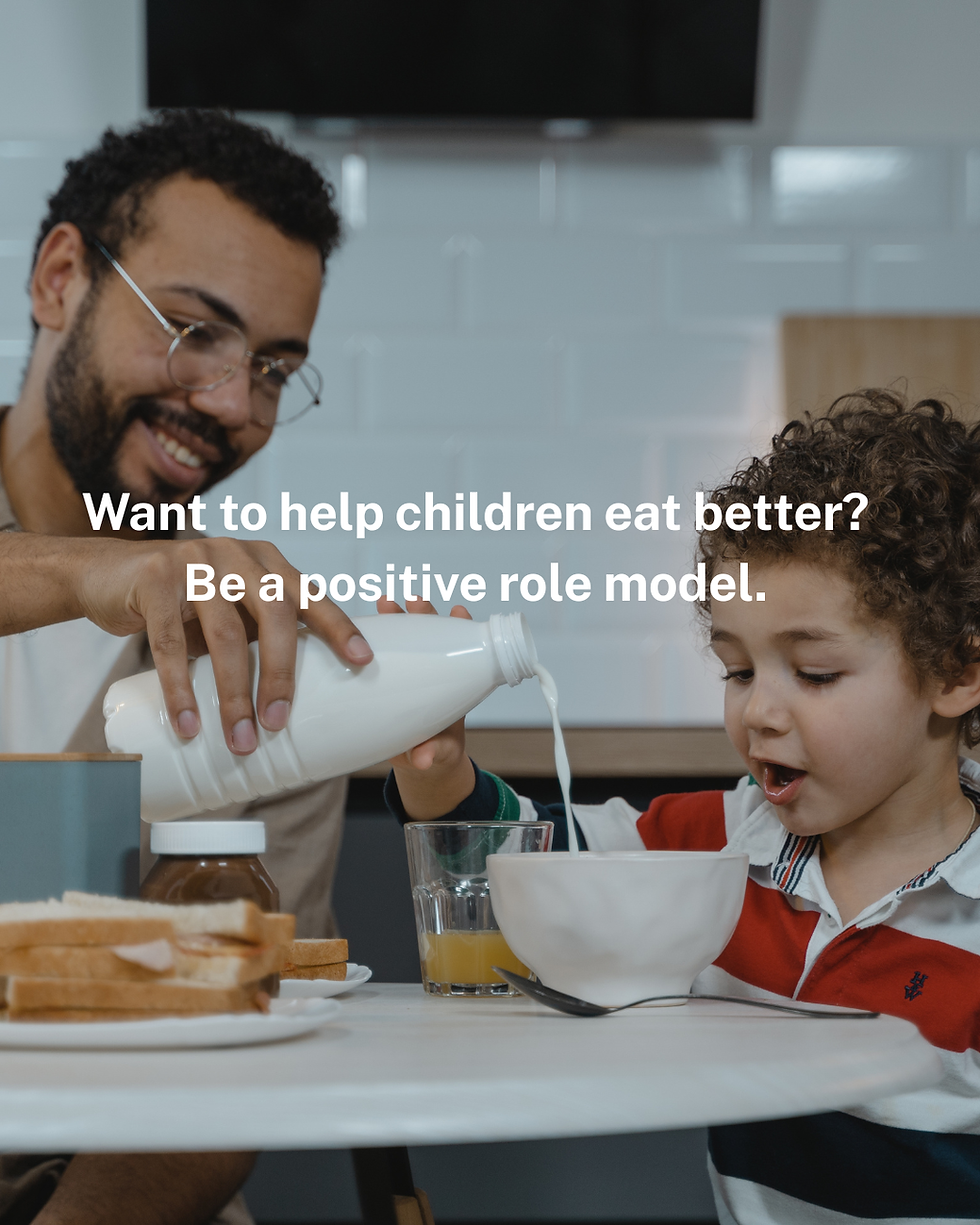
Family-style service is when the food is placed in serving bowls on the table and children are encouraged to serve themselves rather than being served pre-plated food. The adult caregivers sit at the table with the children, assisting the children in serving, eating the same foods as the children, and engaging the children in pleasant conversation.
Mealtime is much more than just a time to feed children. It is a time for children to learn new skills and independence, to practice getting along with others in a community setting, to learn manners, to practice the art of conversation, and to learn from adults and other children in a relaxed and pleasant setting. Mealtime is just as much an opportunity for learning as any other activity that takes place in your childcare program.
The most common reasons given for not doing family-style service are:
It may result in spills and messes.
It might take longer than having adults do the serving.
Children might contaminate the food by touching it.
Children might take too much food, leading to waste, or they may take too little food, thus not meeting the guidelines for what children need.
The next part of the workshops demonstrated what happens when the mealtime environment is NOT child-friendly. This required setting a table on blocks, placing catalogs on four chairs so that adult participants’ feet did not touch the floor, and placing the food to be served in a large, heavy, non-transparent bowl with an oversized spoon. Four participants volunteered to sit at the table and attempt to serve themselves. The remaining participants recorded the problems they observed.
How can we redesign our mealtime environment?
At this point in the workshops, we compared this negative environment to what they selected on their assessments and described how to redesign for an optimal environment.
Table and chairs:
Look at item 1 on the assessment. If your table height isn’t somewhere between each child’s nipple line and belly button, it is too high or too low and they will have trouble serving and feeding themselves. You can also check for proper table height by seeing how comfortably the children’s elbows and forearms rest on the table. When they sit at the table, their arms shouldn’t spread out like “chicken wings.” To correct this problem, use booster seats on the chair to make the table height correct for each child. If the table is too low, it’s time to move the child up to the next size of table.
If the chair height doesn’t allow the children’s feet to be firmly planted on the floor, they will not be able to turn their trunks to pass food to one another and will be much more likely to spill. Hand skills improve by three-fold when feet are firmly planted on the floor. If the heights are not correct, you don’t have to purchase new chairs – just place something on the floor as a footrest.
Serving bowls and utensils:
Look at item 2 on the assessment. Children can’t be expected to pass dishes that are too large or heavy, or to use serving utensils that are too large for small hands to manage. You don’t have to buy anything specialized – small, lightweight bowls with rims are easy to pass and can be purchased anywhere. Have enough of them at the table so small amounts of food can be placed in each one and children don’t have to wait to serve themselves until one bowl makes it all the way around the table. For a serving spoon, a standard tablespoon works well. Keep handles relatively short, because long handles will encourage unwanted flinging of food.
Skills needed for children to serve themselves:
Look at item 3 on the assessment. Do you teach children how to serve themselves or do you serve the food to them? Children can learn how to safely serve themselves without making messes or contaminating the food, but it requires patient instruction and guidance from adults at the table. When children are passing food around the table, teach them to turn toward the person they are passing to, look that person in the eye, and make sure that person has a firm grip on the bowl. The child being passed to can communicate that they have their hands firmly on the bowl by nodding or saying thank you.
Look at item 4 on the assessment. Many people worry that children won’t take the right amount of food when serving themselves. They think they will take too much or too little. Remember, you are not required to make sure children eat a certain amount of food, or even that a certain amount of food gets onto their plates. You just have to be sure that you have prepared enough for all children to have the amount specified by the USDA in the Child and Adult Care Food Program guidelines and that it is put on the table for them. Studies show that children who feel pressured to eat something actually become more “fussy” or “picky” than when they are allowed to decide if and when to try a food.
When children aren’t used to serving themselves, they will often overestimate and take more than they can eat. However, with time, children become excellent judges of how much they are hungry for, and studies show that there is much less waste than when adults do the serving. Children who serve themselves become more sensitive to their internal hunger and fullness cues and are less likely to overeat.
Look at item 5 on the assessment. Is your mealtime routine centered on staff convenience or on creating a learning environment for the children you serve?
Children who are provided with age-appropriate ways to participate in all aspects of the meal experience build skills and independence. They become cooperative members of their classroom community and learn to share with others. When involved in the meal setup and cleanup, they learn to serve others. It may seem easier for adults to do these tasks for them, but with guidance and practice, it not only builds responsible children but also makes our jobs easier. Serving family-style also encourages polite talk and good manners as food is passed and served.
This video shows how an optimal mealtime environment looks in a real childcare setting.
Whether the children you serve are your own, at home, or in a childcare setting, family-style service and an optimal mealtime environment are essential for helping children eat better and build a healthy relationship with food and eating.
“The child who is allowed to choose, prepare, and serve his own food is more likely to develop a sense of respect for the food, the environment, and the people with whom he shares it.”
~ Maria Montessori
If you liked this content, please share it.


Comments